A Different Kind of Water Treatment.
A Different Set of Results.

Most approaches to hard-water scaling share the same logic: add something to the water, remove something from the water, or repeat both indefinitely. PV WCS by Procon Ventures takes a different starting position entirely.

Rather than dosing chemicals or stripping minerals with salt, PV WCS physically changes the behaviour of dissolved hardness minerals. Through a targeted physical conditioning process, those minerals are induced to form microscopic, non-adherent crystals that remain suspended in the water flow, passing through your system without bonding to pipe walls, heat-exchanger surfaces, boiler internals, or cooling-tower components.

The result is a water conditioning approach that requires no chemical consumables, no salt, and minimal ongoing intervention, while preserving the natural mineral content of your water. If conventional treatment feels like an ongoing cost of doing business, PV WCS is worth examining from the ground up.
Each differentiator explained

What Sets PV WCS Apart

PV WCS is not a marginal improvement on conventional water treatment. It operates on a different principle, which means its advantages are structural rather than incremental. Here is what that means in practice.

01

Chemical-Free Conditioning

PV WCS does not introduce any chemical dosing agents into your water system. The conditioning effect is physical, not chemical. This eliminates the procurement, storage, handling, and disposal cycles associated with chemical-based treatment programmes, and removes the associated risk exposure from your operation entirely.

02

Salt-Free by Design

Conventional water softeners work by exchanging hardness minerals for sodium ions using ion-exchange resin and regenerating that resin with salt. PV WCS does not use this process. There is no ion exchange, no salt consumption, and no sodium addition to your water. PV WCS is a physical water conditioner, not a water softener.

03

Minerals Stay In. Behaviour Changes.

The calcium and magnesium that cause hard-water scale remain present in your water after conditioning, but their physical state changes. Instead of forming adherent crystalline deposits on equipment surfaces, they form microscopic non-adherent crystals that stay suspended in the water flow. Your water retains its natural mineral profile; your equipment surfaces do not accumulate scale.

04

Minimal to No Recurring Consumables

Chemical treatment programmes carry ongoing consumable costs that compound over the life of a facility. Salt-based softeners require regular salt top-ups and resin maintenance. PV WCS is designed to condition water through physical means, with no chemical refills and no salt replenishment. The recurring consumable cost profile is fundamentally lower by design.

05

No Routine Chemical Handling

Eliminating chemical dosing from a water treatment regime also eliminates the operational burden that comes with it: procurement scheduling, safe-storage compliance, handling procedures, and disposal requirements. For facility operators managing safety obligations across a site, removing a chemical handling dependency simplifies operations in a way that compounds over time.

06

Minimal Maintenance Requirements

Because PV WCS has no consumables to replenish and no chemical feed systems to calibrate or clean, the day-to-day maintenance burden is low. There are no dosing pumps to service, no brine tanks to refill, and no chemical feed lines to inspect. This characteristic is particularly relevant for facilities where maintenance capacity is constrained or where unplanned downtime carries a significant operational cost.

07

Supports Eco-Friendly and Sustainable Operations

Eliminating chemical dosing from a water treatment process has a direct environmental dimension. There are no treatment chemicals entering the water system, which reduces the chemical load associated with water discharge from treated systems. For organisations with environmental management commitments or sustainability reporting obligations, a chemical-free conditioning approach is a structurally cleaner starting point.

08

Compatible with Existing Pipelines and Systems

PV WCS is designed to integrate into existing water system infrastructure. It is not contingent on a complete system rebuild or the installation of parallel treatment infrastructure. Compatibility with a specific installation is subject to application assessment, as system configuration, flow conditions, and water chemistry all inform the appropriate specification. That assessment is part of the technical consultation PV WCS provides.

09

5-Year Product Warranty

Every PV WCS unit is backed by a 5-Year Product Warranty. For capital equipment purchasing decisions, warranty coverage is a direct indicator of product confidence. A five-year commitment on the product itself provides a clear assurance baseline for operators making long-term infrastructure decisions.

10

Expert Technical Support

PV WCS is supported by a team with applied technical knowledge of water conditioning and industrial water system requirements. Support is available through the consultation and assessment process, and extends through product specification and post-installation guidance. The intent is to ensure that PV WCS is correctly matched to the application, not simply sold and deployed.

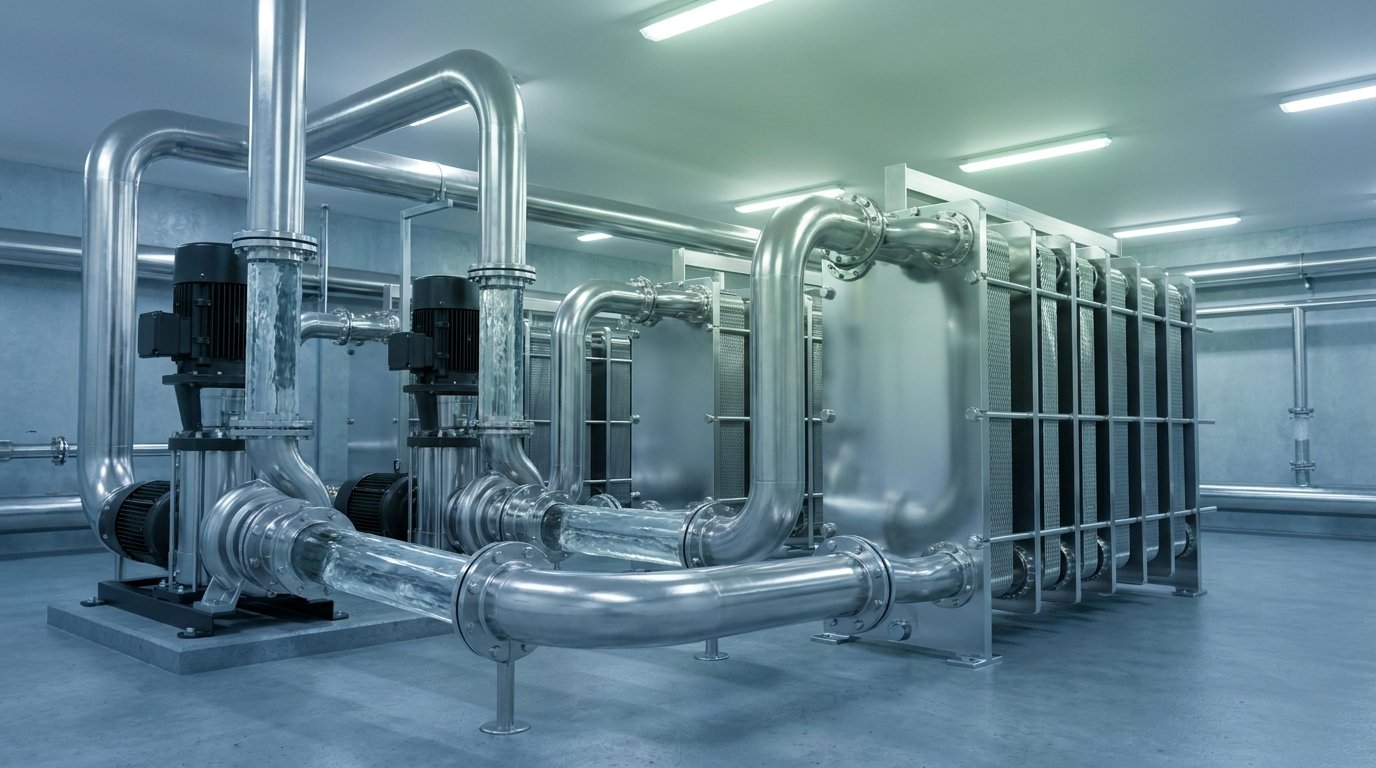
Clean industrial water system without chemical treatment equipment, representing a chemical-free operational environment Chemical-Free

Environmental case

The Environmental Case for Physical Water Conditioning

Chemical-based water treatment has a resource footprint that is easy to underestimate when you are accounting for it line by line. Each dosing cycle draws on manufactured chemicals that must be produced, packaged, transported, stored on site, and eventually processed as part of water discharge management. That cycle repeats continuously for as long as the treatment programme runs.

PV WCS breaks that cycle at the source. Because conditioning is achieved through a physical process rather than chemical addition, there are no treatment chemicals entering the water in the first place. The absence of chemical inputs is not a product claim applied retrospectively for sustainability positioning, it is a direct consequence of how PV WCS works.

For facilities operating under environmental management frameworks or working toward reductions in chemical dependency across their operations, this distinction carries practical weight. It is worth stating clearly, however, that the environmental profile of any water treatment change is application-specific. PV WCS does not make blanket environmental performance claims. What it does offer is a conditioning approach that, by its design, removes chemical dosing from the equation.

By design, not by retrofit. Chemical elimination is an inherent feature of how PV WCS works, not an add-on capability applied after the fact.

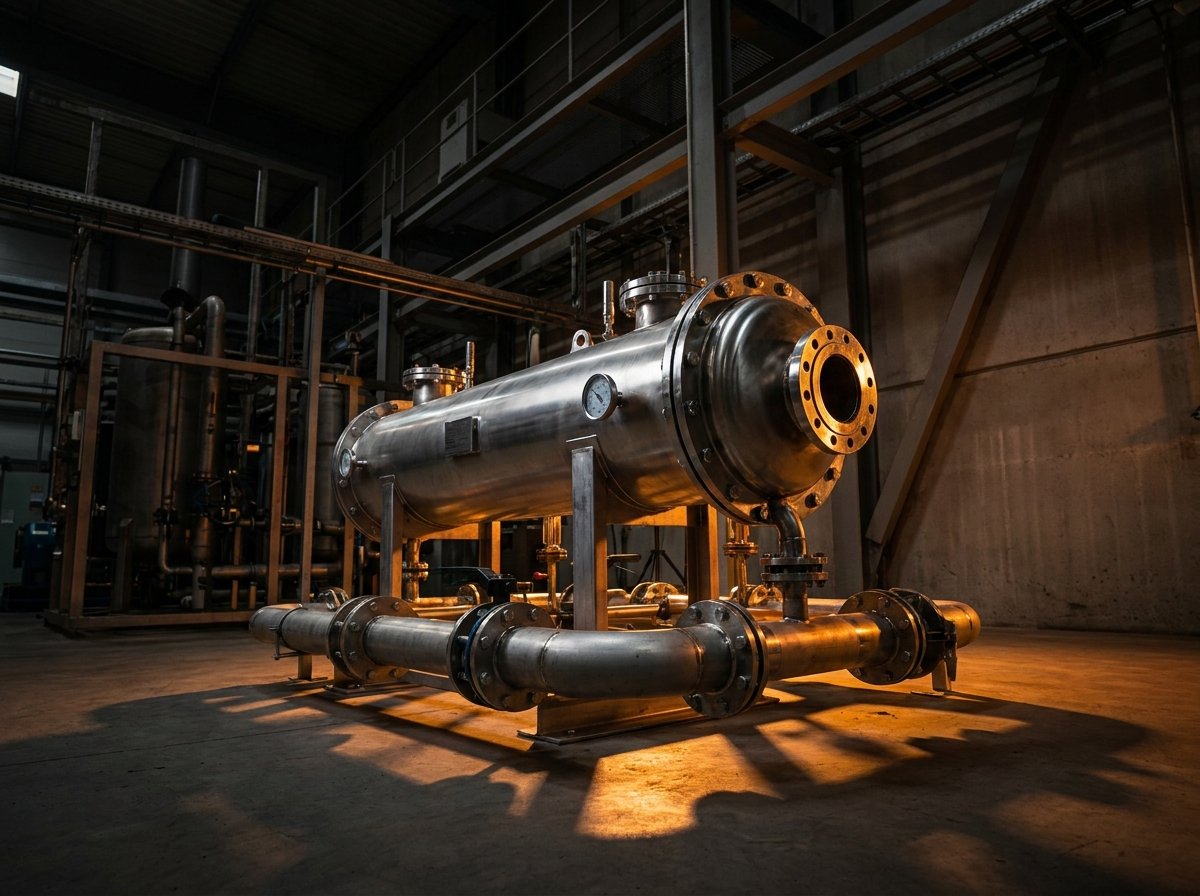
PV WCS physical water conditioning unit installed on industrial pipework, showing quality construction and professional installation
5-Year Product Warranty

Credentials

Why Industrial Operators Trust PV WCS

Trust in a water conditioning product is built from multiple directions: the durability of the product itself, the standards the manufacturer operates under, the breadth of applications the technology has been put to work in, and the quality of the technical support available when questions arise.

5-Year Product Warranty

PV WCS carries a 5-Year Product Warranty. This is not a standard one-year coverage extended as a marketing gesture. A five-year warranty on a physical conditioning unit reflects confidence in the product's construction and long-term operational integrity. For capital expenditure decisions in industrial and commercial water systems, warranty duration is a concrete, comparable metric.

ISO Certification

Procon Ventures holds ISO Certification relevant to the design and supply of PV WCS. The precise certification details are subject to confirmation and will be displayed with full accuracy once formally approved for publication. If the specific standard is material to your procurement or compliance process, please raise it directly during your technical consultation and the team will provide verified documentation.

Industrial Application References

PV WCS has been applied across industrial and commercial water systems spanning the target sectors PV WCS serves: facilities managing cooling towers, heat exchangers, boilers, HVAC systems, and process water infrastructure. Application references and project details are available on a consultation basis. If your sector or system type is a deciding factor, that conversation is best had directly with the technical team.

Expert Technical Support

The support structure behind PV WCS is technical in nature, not transactional. From initial system assessment through product specification and post-installation, the team brings applied knowledge of water conditioning requirements across industrial and commercial contexts. The goal is correct application of the technology, which means support begins before any purchasing decision is made.

Common questions

Common Questions from Technical Buyers

Buyers evaluating PV WCS for the first time often come with questions shaped by experience with conventional water treatment. These are the questions we hear most often, answered directly.

No. A water softener works by ion exchange: it swaps hardness minerals (calcium and magnesium) for sodium ions, and periodically regenerates its resin with salt. PV WCS does not use ion exchange, does not add sodium to the water, and does not consume salt. It is a physical water conditioner. The distinction matters both technically and operationally — the two categories solve different problems using fundamentally different mechanisms.
No. The minerals that cause hard-water scale — primarily calcium and magnesium — remain present in the water after it passes through a PV WCS unit. What changes is their physical behaviour. PV WCS induces those minerals to crystallise in a microscopic, non-adherent form that stays suspended in the water rather than bonding to equipment surfaces. Your water retains its natural mineral composition; the scale-forming tendency of those minerals is physically modified.
PV WCS is designed to integrate with existing pipeline and water system infrastructure, but compatibility is confirmed through application assessment rather than assumed as a default. System configuration, pipe diameter, flow rate, water chemistry, and the types of equipment in the circuit all inform whether PV WCS is the appropriate specification and how it should be applied. A technical consultation is the starting point for that determination — it is not a sales call, it is an engineering conversation.
PV WCS has no chemical consumables to replenish and no salt to reorder. There is no dosing equipment to service and no brine tank to manage. The recurring cost structure is low by design. The comparison point that matters is your current programme: if you are running a chemical dosing or salt-based softening regime, the consumable and servicing spend associated with that programme does not carry over to a PV WCS installation. Any residual ongoing requirements, such as periodic technical review tied to your specific system, would be discussed as part of your consultation.

Next step

Find Out If PV WCS Is Right for Your System

The right starting point is a technical conversation about your specific water system, the problems you are experiencing, and whether PV WCS is a fit for your application. There is no one-size-fits-all answer in water conditioning, and PV WCS is specified on the basis of assessment, not assumption.

Request a technical consultation, ask about a product demonstration, or download the technical brochure to review the detail at your own pace. If you are exploring a dealer or distributor partnership, that enquiry is equally welcome.

Get in touch

Start the Technical Conversation

Use the form to request a consultation, ask a technical question, or enquire about a partnership. The team will respond with the detail your question deserves.

1916, Scheme No. 114, Part 1,
Niranjanpur Road, Indore,
Madhya Pradesh 452001, India