Industries and Applications

Hard-water scale does not discriminate by sector. Whether you operate a cooling tower in a manufacturing plant, a steam boiler in a food processing facility, or a chilled-water HVAC circuit in a commercial building, dissolved minerals behave the same way inside your pipework: they deposit, they accumulate, and they quietly erode system performance over time.

PV WCS by Procon Ventures applies a chemical-free, salt-free physical conditioning approach across a wide range of industrial and commercial water systems. This page outlines the key application areas where scale poses measurable operational risk, and explains how PV WCS is configured to address each one.

One Conditioning Principle.
Many Applications.

The core mechanism of PV WCS remains consistent across all applications: instead of adding chemicals to neutralise hardness or using salt to strip minerals from water, PV WCS physically changes the behaviour of dissolved calcium and magnesium. These minerals are conditioned to form microscopic, non-adherent crystals that stay suspended in the water flow rather than bonding to pipe walls, heat-transfer surfaces, or equipment internals. The result is that the minerals remain in the water — they are not removed — but they lose their ability to adhere and accumulate as scale.

What changes from one application to the next is the configuration required to achieve this effect reliably. Water chemistry varies by geography and source. System pressures, flow rates, temperatures, and equipment types all affect how conditioning should be applied. That is why every enquiry at Procon Ventures begins with an application-specific assessment: to confirm that PV WCS is appropriate for the system in question, and to determine the correct configuration before any recommendation is made. This is not a box-and-ship proposition — it is a technically considered fit between the conditioning technology and your water system.

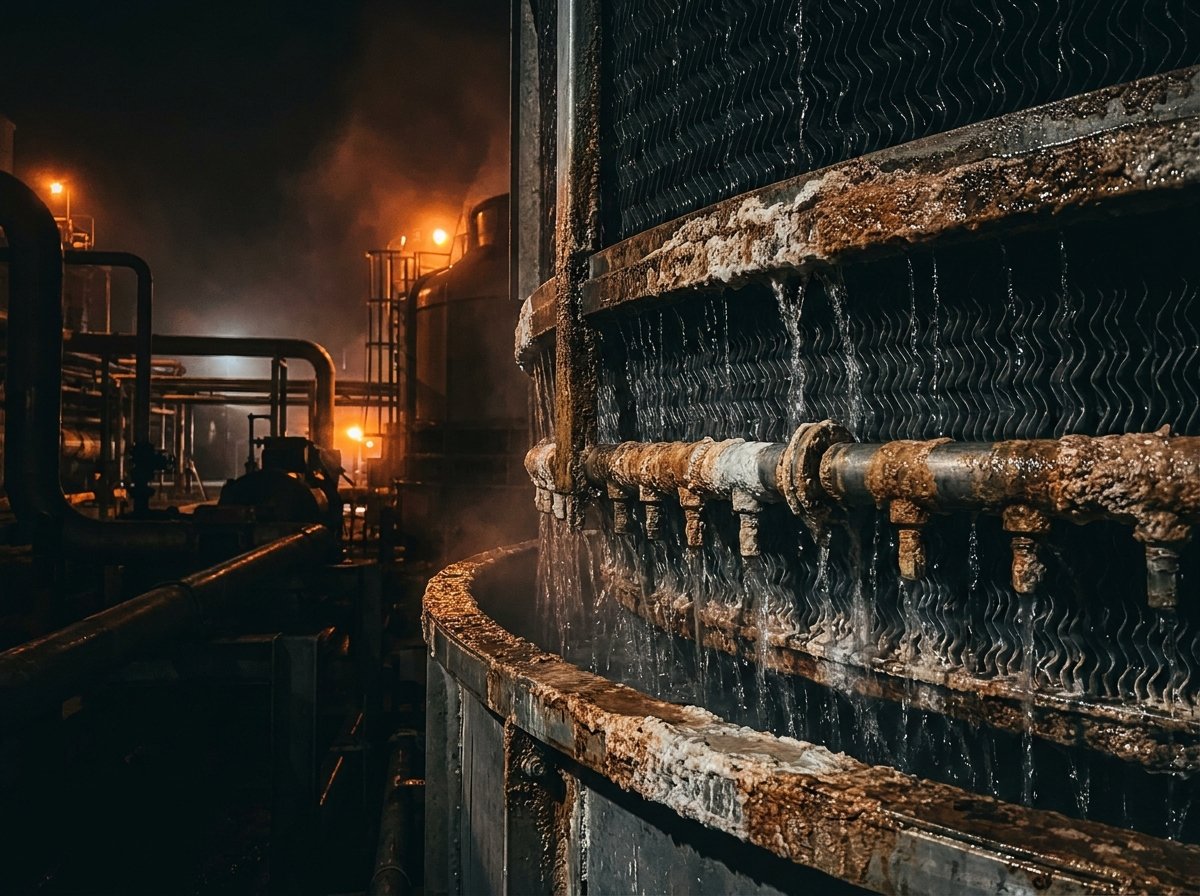
Close-up of industrial cooling tower fill media with scale deposits on surfaces

Application 01

Cooling Towers

Cooling towers depend on sustained heat-transfer capacity to do their job. Scale deposits on tower fill media, distribution nozzles, and heat-exchange surfaces directly compromise that capacity. As mineral layers build, the system has to work harder to achieve the same cooling output, and energy consumption rises accordingly.

Beyond energy, scale accelerates the physical degradation of tower components. Blocked nozzles distort water distribution, reducing cooling efficiency across the fill. Periodic descaling or mechanical cleaning becomes a recurring operational cost, and each cleaning event represents a planned shutdown that interrupts production or facility operations.

PV WCS conditions the water before it enters the tower circuit. Rather than managing scale that has already formed, operators address the conditions that allow scale to form in the first place. Application assessment is required to confirm suitability for your specific tower configuration.
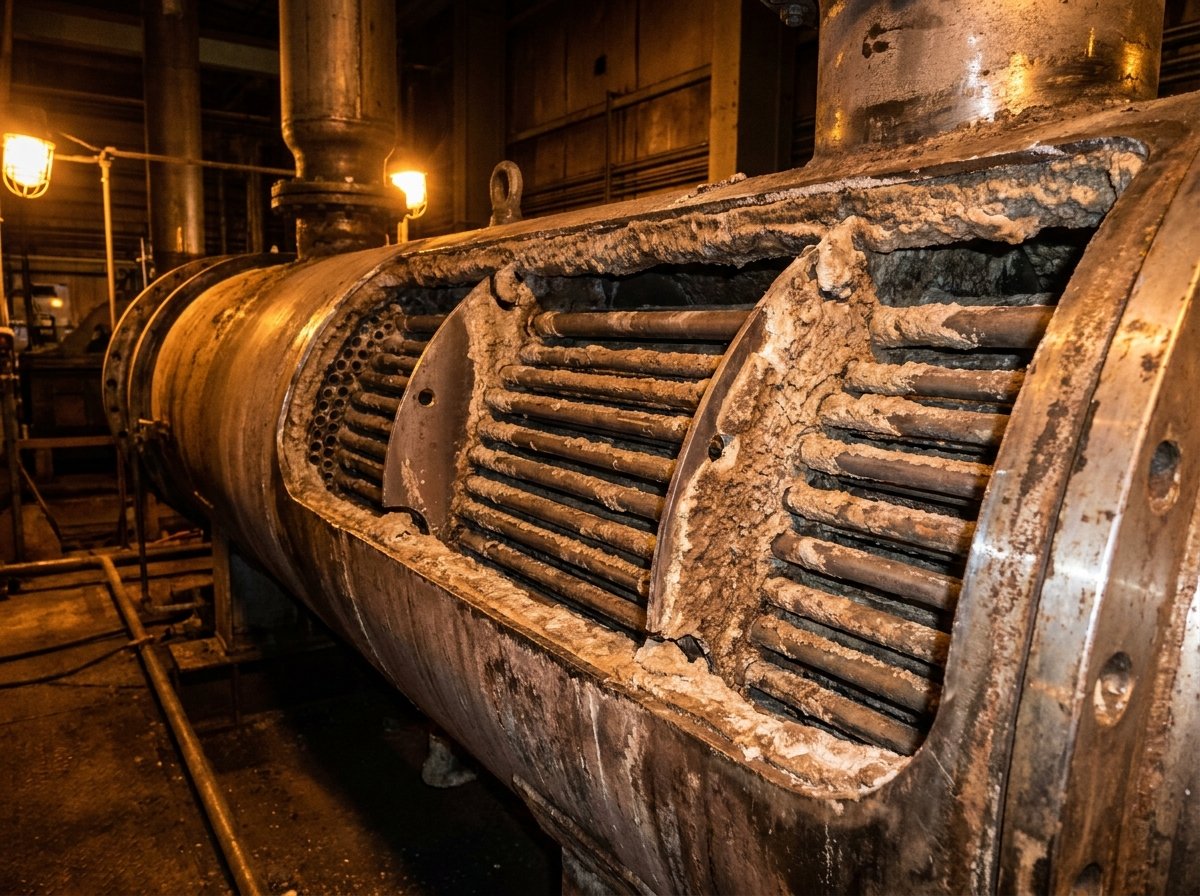
Heat exchanger tube bundle showing scale deposits on heat transfer surfaces

Application 02

Heat Exchangers

In heat exchanger applications, scale is not merely a maintenance problem. It is a thermal insulation problem. Even a thin deposit of calcium carbonate scale on heat-transfer surfaces acts as an insulating barrier between the hot and cold fluid streams, forcing the exchanger to consume more energy to compensate for degraded heat transfer. The thicker the deposit, the more pronounced the energy penalty.

Heat exchangers are often arranged in configurations where access for mechanical cleaning is restricted, and where full descaling requires taking the unit offline. In extreme cases, scale-induced hot spots in heat exchanger tubes can lead to localised overheating, mechanical stress, and premature failure of expensive equipment.

When PV WCS is applied upstream of a heat exchanger, minerals arrive at the heat-transfer surface in a form that does not adhere. Suitability and configuration depend on the exchanger type, fluid temperatures, and water chemistry at your site — assessment by Procon Ventures establishes this before any system is specified.

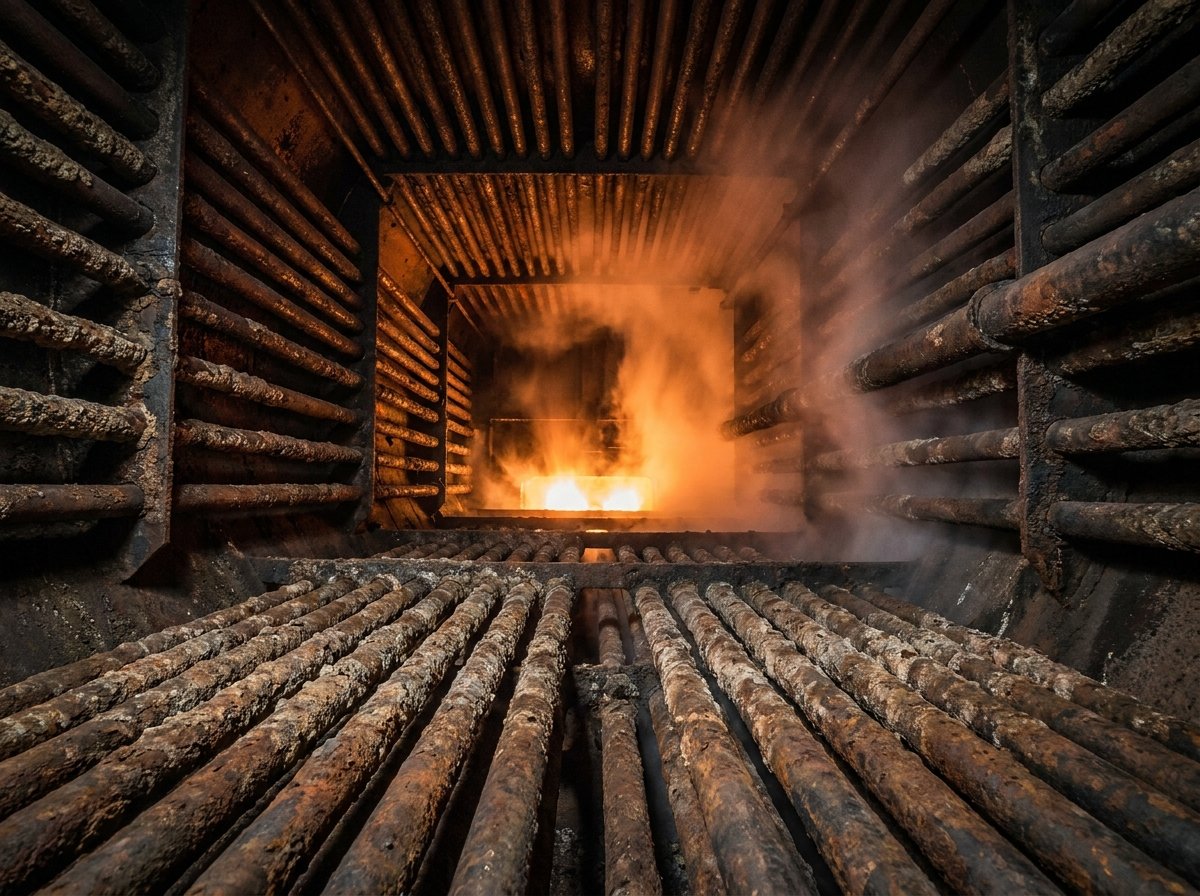
Industrial boiler tubes showing mineral scale deposits on internal heating surfaces

Application 03

Boilers

Scale in boilers is among the most serious consequences of untreated hard water in industrial settings. Scale deposits on boiler surfaces interrupt heat transfer. The metal wall must absorb heat that cannot pass through the insulating scale layer, and local temperatures on the metal surface rise as a result. This overheating puts thermal stress on the boiler structure, causes accelerated wear, potential tube failure, and in severe cases presents a safety risk that requires immediate shutdown.

Beyond safety, a scaled boiler consumes significantly more fuel to produce the same steam output as a clean one, directly increasing operating costs. Boiler descaling is a chemically intensive, time-consuming, and operationally disruptive process that introduces handling risks and disposal obligations.

PV WCS conditions the feedwater so that dissolved minerals enter the boiler in a non-adherent form, working to prevent scale from forming on boiler surfaces in the first place. Given the safety implications, a thorough application assessment is essential before PV WCS is deployed in any boiler feedwater system.

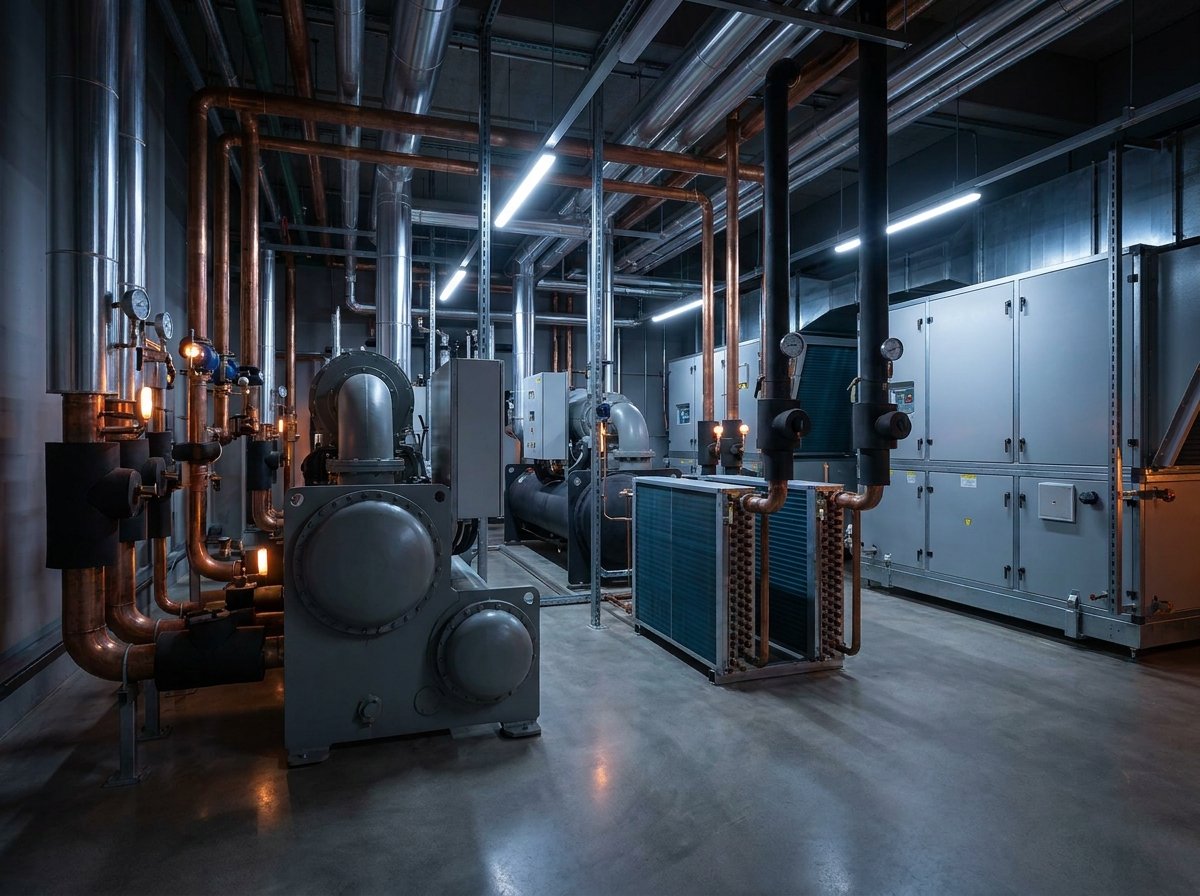
Commercial HVAC plant room showing chiller units and extensive pipework network

Application 04

HVAC Systems

Commercial and industrial HVAC systems move water through extensive pipework networks, across chiller and condenser surfaces, and through air handling units. Scale formation anywhere in this network degrades system efficiency. On chiller and condenser heat-exchange surfaces, scale forces chillers to operate at higher energy draw to achieve target cooling loads. In pipework, progressive scale build-up narrows effective bore diameter, increases flow resistance, and reduces the volume of conditioned air or chilled water the system can deliver.

HVAC networks in commercial buildings, hospitals, hotels, and large industrial facilities are typically designed for long service life with minimal invasive maintenance. Descaling these systems in situ is difficult and disruptive, adding considerable cost and downtime.

PV WCS can be integrated into existing HVAC water circuits, subject to system-specific assessment. Integration without disruption to existing pipework is a key consideration, and Procon Ventures evaluates this as part of every HVAC application consultation.

Further Sectors Where Scale Imposes Operational Cost

PV WCS is relevant wherever hard water contacts equipment that is sensitive to mineral deposits. Across the sectors below, scale formation in water-dependent processes drives the same categories of operational burden: reduced heat-transfer efficiency, elevated energy consumption, maintenance shutdowns, and shortened equipment life. The chemical-free, salt-free conditioning approach of PV WCS is directly applicable in each context, subject to application assessment.

Food Processing Facilities

Scale deposits on pasteurisation and heat-treatment equipment force higher energy input to reach target process temperatures. On CIP systems and spray nozzles, mineral build-up restricts flow and reduces cleaning effectiveness. Chemical water treatment introduces handling, storage, and documentation obligations that PV WCS does not require.

Textile Plants

Hard water affects fabric quality directly: mineral deposits in dyeing baths interfere with dye uptake uniformity, and scale on steam heating surfaces forces higher energy input to maintain process temperatures. The absence of chemical dosing in PV WCS is relevant because dye chemistry is sensitive to introduced substances.

Hotels and Hospitality Operators

Hotels operate water systems across a wide range of simultaneous demands: hot-water supply, HVAC conditioning, pool plant, commercial kitchen equipment, and laundry. The minimal-consumables profile of PV WCS, with no recurring chemical or salt purchases required, is operationally relevant for properties managing ongoing utility and maintenance budgets.

Hospitals and Healthcare Facilities

Healthcare facilities require reliable, uninterrupted hot and chilled water supply across clinical, catering, and building systems. The elimination of chemical dosing is particularly relevant in healthcare settings, where the introduction of water treatment chemicals into systems supplying clinical areas introduces risk considerations that do not apply with physical conditioning.

Power Plants

Power generation facilities operate at high temperatures and pressures across boilers, cooling circuits, and heat recovery systems where the consequences of scale are amplified. The scale impact on productivity can go unnoticed until equipment inspection reveals the extent of build-up, making upstream physical conditioning a consideration for operators focused on maintaining baseline thermal efficiency.

Steel and Automotive Manufacturing

Scale deposits in cooling circuits reduce the rate at which equipment can be brought back to operating temperature after processing cycles, affecting throughput. In hydraulic and precision-cooling systems, mineral accumulation can increase the risk of blockages that trigger unplanned production stoppages — with direct economic consequences in high-throughput manufacturing environments.

Educational Institutions

Universities, colleges, and large school campuses operate centralised hot-water and HVAC systems serving buildings across extended site footprints. For institutions managing facilities across long asset lifespans on constrained maintenance budgets, the minimal-maintenance profile of PV WCS — with no chemical refills or salt consumables — reduces the ongoing operational burden of water system management.

Chemical Industry Operators

Process water in chemical manufacturing circulates through heat exchangers, reactors, condensers, and cooling towers where scale formation interferes with thermal performance and process consistency. PV WCS conditions water without chemical dosing, which removes an additional chemical stream from the water treatment process in applications where it is confirmed suitable.

Find Out If PV WCS Is Right for Your System

PV WCS does not come with a universal specification. Whether it is the right fit for your cooling tower, boiler, HVAC circuit, or process water system depends on your water chemistry, your equipment configuration, your operating pressures and temperatures, and what you are actually trying to achieve.

If scale is costing you energy, maintenance time, or equipment life, the first step is a conversation with someone who can assess your specific situation.

Application-Specific Assessment

Procon Ventures confirms suitability, identifies the correct configuration, and gives you technically grounded information before any commitment is made.

Product Demonstration

Request a demonstration of PV WCS performance for your application type, or download a technical brochure for detailed specification information.

Dealer and Distributor Partnerships

Explore the partnership programme if you are evaluating PV WCS on behalf of clients or a distribution network.

Request a Technical Consultation

Start with a Conversation

Procon Ventures offers application-specific assessment and technical consultation as the starting point for every enquiry. Reach us directly or use the form and we will respond promptly.

Request a Consultation